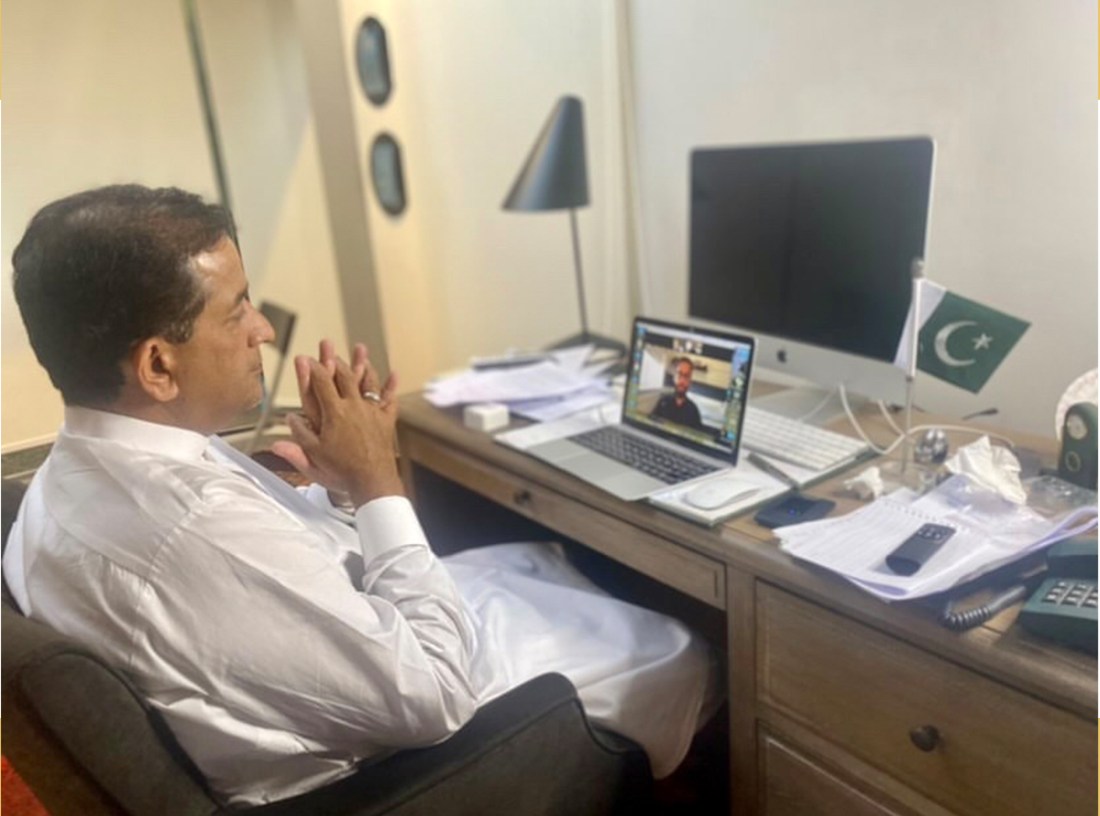
When Malik Amin Aslam drafted a green growth agenda for Pakistan in 2015, planting half a billion trees, is what he had in mind.
Four years later, a billion trees have been planted in the northwestern region of the country.
Now, he wants to plant ten billion more.
Pakistan has lost $3.8 billion in the last 20 years to climatic events, ranking fifth in the Global Climate Risk Index. This year alone, the country saw 189 lives washed away by an unpredictable spell of monsoon rains.
For Aslam, Pakistan’s federal minister for climate change, and the man behind the Billion Tree Tsunami project, the time for talks has passed. He is leading Pakistan’s Billion Tree Tsunami project, an effort to combat climate change by reforesting more than 3.5 million hectares. His efforts have won recognition from the World Economic Forum, the World Wide Fund for Nature, the International Union for Conservation of Nature and the Bonn Challenge among others.
“Pakistan’s survivability in the future in based on how we deal with climate change,” the minister noted. “It is absolutely essential. It is a situation without a choice.”
In 2002, Aslam developed Pakistan’s first Clean Development Mechanism Strategy, which to this day is serving as a blueprint for the country’s environmental policies. On a global level, he serves as the Vice-President of IUCN and in the past has chaired the G77+China negotiations group. However, boardrooms and international offices can not challenge the satisfaction he gets from carrying out on-ground work.
“Global discourse is good because it keeps on setting the direction, but it’s all talk,” he said. “People talk a lot but no one is willing to walk that talk. The real difference happens when you come down to the ground and do the projects.”
Syed Saju, a local jeep driver and tour guide from Skardu commented on how he saw the reforestation efforts in the entire region, as he accompanied tourists coming from the cities. “I’ve seen government employees distributing saplings in many districts around my village in the spring season,” Saju said.
These days, Federal Minister Aslam is working on a protected areas initiative to create new national parks while also reforesting the urban areas of Punjab and KPK provinces of Pakistan. Speaking on the issue of smog plaguing the country’s second largest city, Lahore, which was historically known as the city of gardens, he said that previous governments from 2005 to 2015 had eradicated more than 70% of the green spaces through construction works.
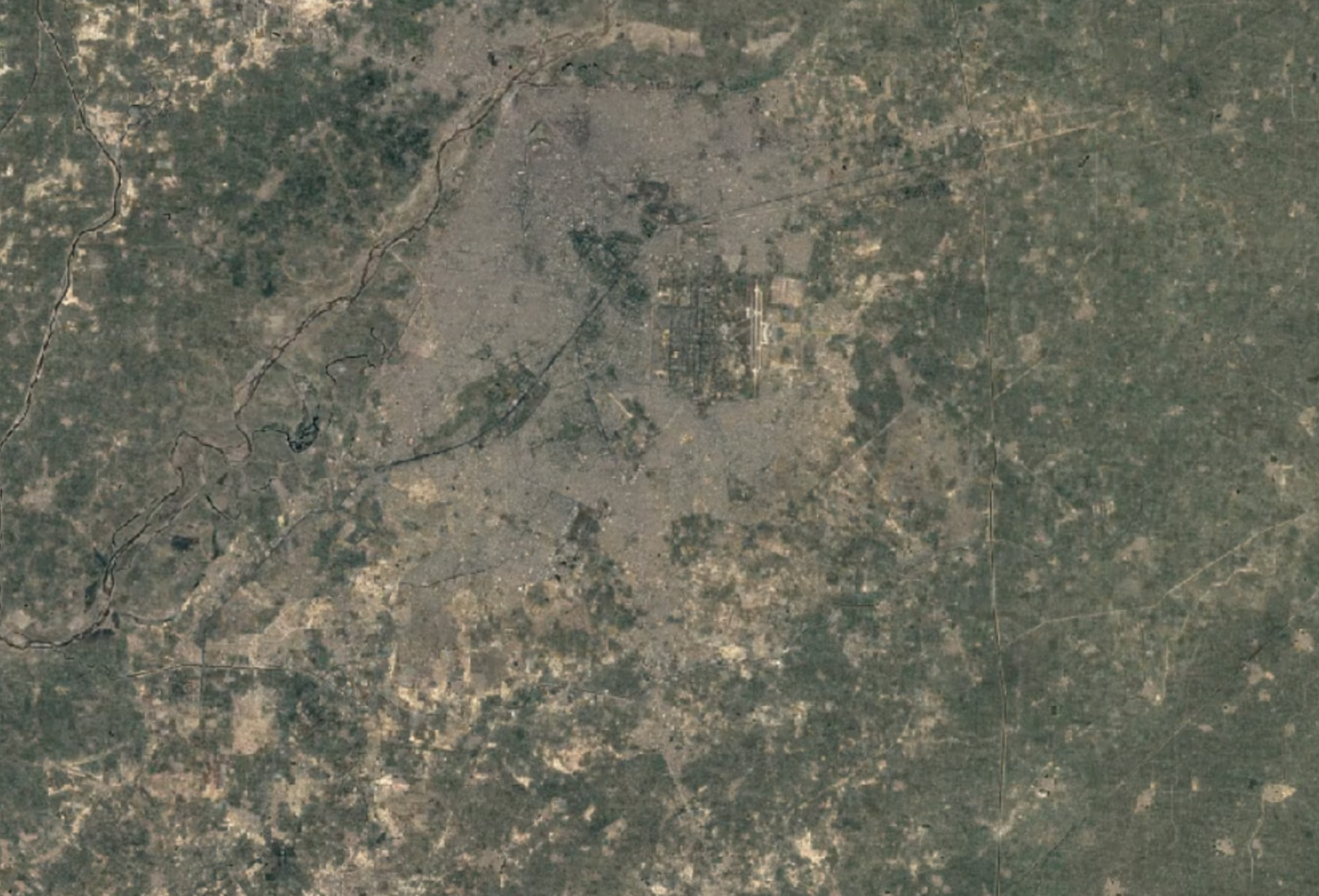

“You can see it in the satellite pictures, just going away,” he added. “Our government is doing some very big projects in and around Lahore. Balloki is one example where about 3500 acres of state land, which was encroached upon, has now been turned into a forest.”
The ministry is also working on creating fast growing, urban forests through the Japanese Miyawaki method. 50 sites within Lahore and a further 50 on the outskirts of the city have been identified with two pilot projects, underway.
Before shifting his career path to environmentalism, Aslam worked as an engineer in the power sector of Pakistan. When he decided to go to Oxford to study emissions trading, it was a new and risky field. However, risk is something that still excites him.
“I like to take risks in my life. I’ve done skydiving,” the minister said. “Without telling my family, I jumped off 10,000 feet. It was a very elating moment in my life.”
He further mentioned his love for scuba diving, which he does regularly. “Its a different world when you go underwater. It liberates you in a sense.” He added that both of these interests are born out of his love for nature. This is something that Minister Aslam and the Prime Minister, Imran Khan, both have in common.
Pakistan’s survivability in the future in based on how we deal with climate change.
Malik Amin Aslam
“We’ve had the chance to be together in the wild a number times,” he said, recalling a memory of when he visited the wild, mountainous district of Malakand with Prime Minister Khan. “In politics, it is always a tense situation but thats where he is at his best; you would see him in his element.”
This was hardly the first time Aslam had visited the virgin natural beauty of northern Pakistan. His career path has been shaped by the many excursions he would make with his father as a child, who himself was a strong political force in his time. Reminiscing on one of the more memorable trips, he mentioned how his father took him to Satpara Lake near the mountain city of Skardu as a child to camp there for a week.
“Those trips had a very strong influence on creating a love for nature,” he said. “This is one of the fields you can not make a difference in, unless you have that passion in you.”
The places that Aslam visited as a child are now teeming with bustling villages and towns. However, that has not stopped him from taking his family to discover new valleys in the northern Gilgit Baltistan region. His son, Malik Hussain, remembers how as a child he was able to hold a snow leopard cub named Leo, which was orphaned in a land slide incident, and was later moved to the Bronx Zoo in New York.
“I remember holding Leo as a cub in my arms,” Hussain said. “I feel like that was perhaps one of the most magical and memorable incidents for me, holding a snow leopard cub!” Hussain owes this experience to his father.

 Abdullah Imran Tahir